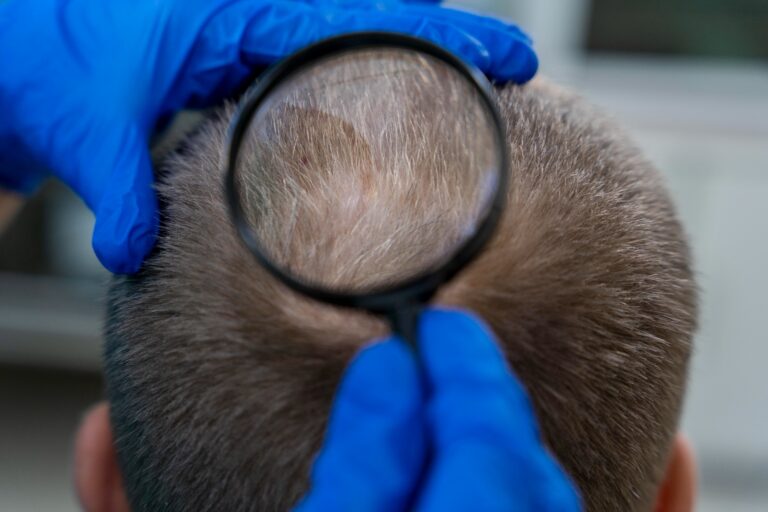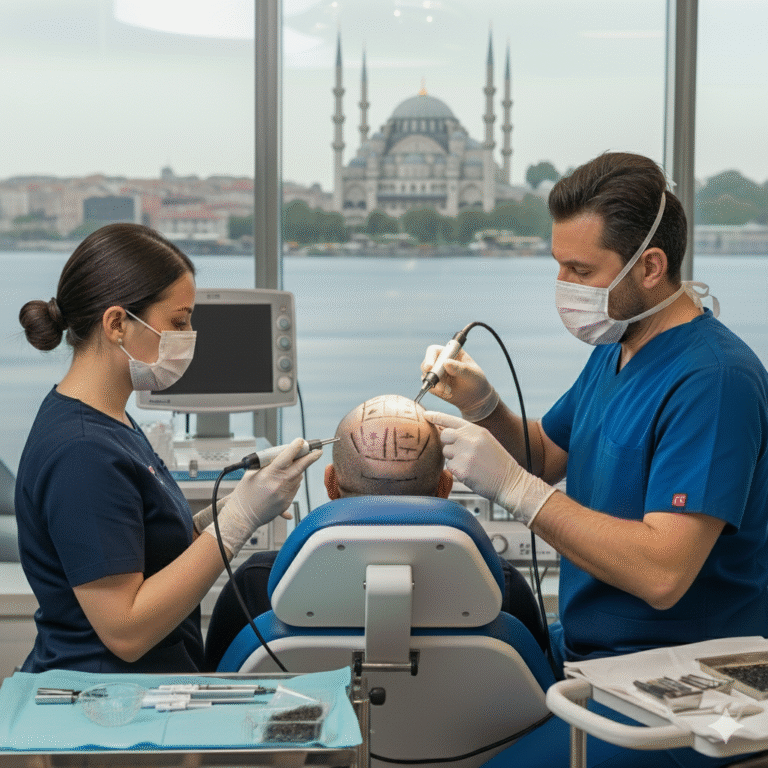
Hair loss is a universal concern affecting millions of men and women worldwide. Whether caused by genetics, environmental factors, or lifestyle changes, thinning hair can significantly impact an individual’s self-esteem. Fortunately, modern medical advancements have turned hair transplantation into a highly effective, permanent, and natural-looking solution. Today, regaining your lost hair is no longer a dream but a scientifically proven reality.
What is Hair Transplantation? Understanding the Science
At its core, a hair transplant is a surgical procedure that involves moving hair follicles from a “donor site” (typically the back or sides of the head where hair is more resistant to falling out) to a “recipient site” (the balding or thinning areas).
Unlike temporary fixes like wigs or topical lotions, a hair transplant uses your own biological tissue, ensuring that the body does not reject the graft and the results look completely authentic.
The Most Popular Methods
To achieve the best results, surgeons primarily use two world-renowned techniques:
- FUE (Follicular Unit Extraction): This is the most modern and preferred technique. Hair follicles are extracted individually using a specialized micro-motor tool. This method leaves no linear scars and offers a much faster recovery time.
- DHI (Direct Hair Implantation): A variation of FUE where a specialized pen (Choi Pen) is used to implant follicles directly into the skin without pre-cutting channels. This allows for higher density and precision.
- FUT (Follicular Unit Transplantation): Also known as the “strip method,” this involves removing a small strip of tissue from the donor area. While older than FUE, it is still used in specific cases where large volumes of grafts are needed.
The Hair Transplantation Process: What to Expect
A successful hair transplant is a journey that requires professional expertise and patient patience. The procedure is typically performed under local anesthesia, ensuring that the patient feels no pain during the 6 to 8-hour session.
- Preparation & Design: The surgeon designs a natural-looking hairline tailored to the patient’s facial structure.
- Extraction: Healthy grafts are carefully harvested from the donor area.
- Channel Opening: This is the most artistic phase where the surgeon creates tiny incisions in the recipient area, determining the direction and angle of hair growth.
- Implantation: The harvested follicles are placed into the channels one by one.
Post-Operative Recovery and Timeline
Recovery is often much faster than patients expect. Most individuals can return to their daily routines and work within 3 to 5 days.
- The “Shock Loss” Phase: It is important to note that a few weeks after the procedure, the transplanted hair will fall out. Do not panic. This is a normal part of the process called “shock loss.” The follicles remain healthy under the skin.
- New Growth: New, permanent hair starts to sprout around the 3rd or 4th month.
- Final Results: You will see a significant difference at the 6-month mark, with the full, final density achieved between 12 to 18 months.
Why Choose Hair Transplantation? Beyond Aesthetics
While the visual transformation is the most obvious benefit, the advantages of hair transplantation go much deeper:
- Psychological Well-being: Hair loss is often linked to social anxiety and a lack of self-confidence. Restoring your hair frequently leads to a renewed sense of self-assurance in professional and social settings.
- A One-Time Investment: Unlike expensive serums or medications that must be used indefinitely, a hair transplant is a one-time procedure that provides a lifetime of results.
- Low Maintenance: Once the transplanted hair grows back, it behaves exactly like your natural hair. You can wash it, cut it, and style it however you like without special shampoos or treatments.
Conclusion
Hair transplantation is an art form backed by rigorous science. It offers an effective, permanent solution for those struggling with hair loss, provided it is performed by specialists in a clinical setting. By choosing the right technique and following the aftercare instructions, you can achieve a youthful, aesthetic appearance that lasts a lifetime.
Would you like me to focus on a specific technique (like FUE vs. DHI) or perhaps add a section about “Aftercare Tips” to make the content even longer?